
Winter puts more strain on hospitality service than almost any other season. Guests arrive wet, tired and sometimes hours behind schedule, and they form their first opinion before they reach the desk. Winter hospitality service is less about grand gestures and more about getting the basics right when conditions work against you: a clear path to the door, a warm room, and a team that knows what to say when travel plans fall apart. This guide covers what works, what wastes effort and where teams most often slip.
Table of Contents
- Quick Takeaways
- Why Winter Changes the Guest Experience
- Making the Arrival Feel Warm and Safe
- Room Comfort and Heating Complaints
- Staffing and Shift Planning for Seasonal Peaks
- Handling Disrupted Travel Plans
- Winter Traditions and Local Touches
- Choosing a Winter Service Approach
- Measuring Winter Guest Satisfaction
- Frequently Asked Questions
- Advance Your Hospitality Career
- References
Quick Takeaways
| Key Insight | Explanation |
|---|---|
| Clear the entrance route on a written schedule | Assign one person to each check, log every pass, and cover side routes used by taxis and coaches, not just the main door. |
| Warm rooms before arrival, not after | Schedule heating to finish before check-in, and report any cold room during housekeeping checks so the fault is fixed before the next guest. |
| Ask about the journey first | Open every arrival with a question about the trip, then offer a hot drink or somewhere to dry wet clothing before any paperwork. |
| Forecast winter rosters weekly | Combine booking trends, historical data and weather forecasts, and review the roster at least weekly rather than once for the whole season. |
| Set a routine for late and disrupted arrivals | Confirm the new arrival time, note it on the reservation, and include every late guest in the night handover. |
| Track complaints by cause | Tag comments as heating, access, transport or staff response, then review the tags weekly to spot patterns early. |
Why Winter Changes the Guest Experience
Winter changes what guests need from a stay, often without them saying so. Their bags are heavier, their shoes are wet, and they have usually spent longer getting to you than they planned. The Amadeus guide describes guest satisfaction as the fulfilment of a guest’s wishes, expectations and needs, and in winter those needs shift within minutes of stepping off a train or out of a car.
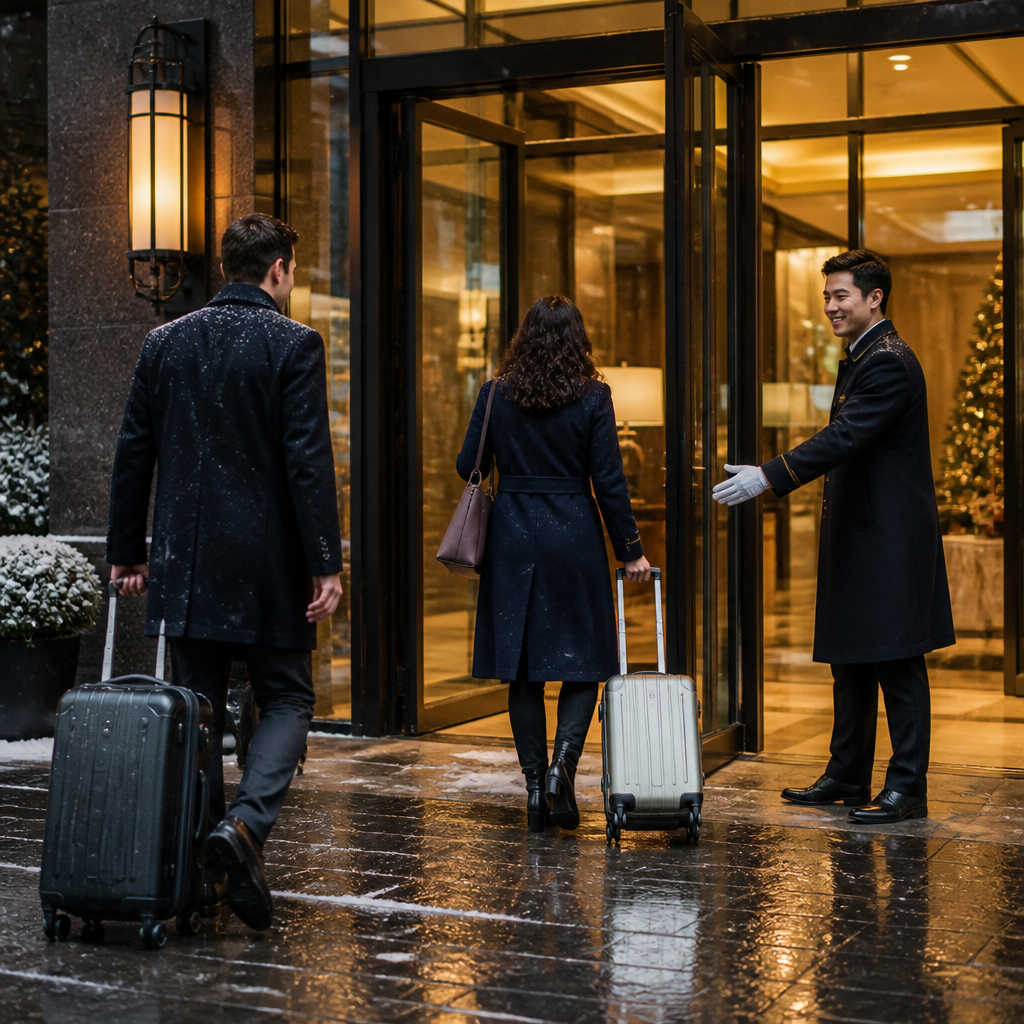
The consequences of getting this wrong are visible and lasting. Unsatisfied visitors may leave bad reviews and damage a property’s reputation, while happy guests are more likely to return and recommend the hotel. A cold lobby or a slippery entrance is a physical discomfort, not an abstract complaint, so guests remember it long after the snow has gone.
Where guests notice problems first
In practice, the first failure point is the threshold. Guests notice the state of the forecourt, whether the entrance mat is dry, and whether anyone looks up when they walk in. The lobby is often judged before the reception desk is even reached.
Why basics beat extras
Seasonal décor and a welcome drink help, but they do not fix a cold room or a dangerous doorway. Fix the physical problems first, then add the warm touches. A team that has done the basics well can afford to be relaxed about the rest.
Pro tip: Walk your entrance at the time guests actually arrive, usually early evening in winter, rather than during the quiet mid-morning walk-round. Lighting, slush and queues look very different in the dark.
Making the Arrival Feel Warm and Safe
The arrival sequence is where winter service either holds together or falls apart. Everything from the car park to the reception desk needs a clear plan, because a guest who slips on the steps will not be cheered up by a complimentary upgrade.
Keeping the approach clear
Write a clearing schedule for paths, steps, ramps and the drop-off point, and name someone responsible for each check. Log every check, including the ones where nothing needed doing, so you can show the schedule was followed. A common mistake is to clear the main door while the side route used by taxis and coaches stays icy.
Put wet floor signs at the start of the wet area, not at the point where someone has already fallen. Keep spare mats near the entrance so the doorway stays dry as guests come in.
The first two minutes at the desk
Do not open with a registration form. Ask about the journey first, and offer to take coats or wet bags. A guest who has just walked through sleet will remember whether the first words they heard were about the weather or about paperwork.
A guest who arrives cold judges the room before they see it. The first two minutes set the terms for everything that follows.
Have a hot drink offer ready, and make sure the person behind the desk knows where guests can dry boots or gloves without leaving the desk. If they have to ask a manager, the guest notices the delay.
Room Comfort and Heating Complaints
Heating is the most common winter issue that frontline teams cannot solve alone, which makes it a planning problem as much as a maintenance one. A room that takes an hour to warm up will generate complaints even when housekeeping is perfect.
Warm rooms before arrival
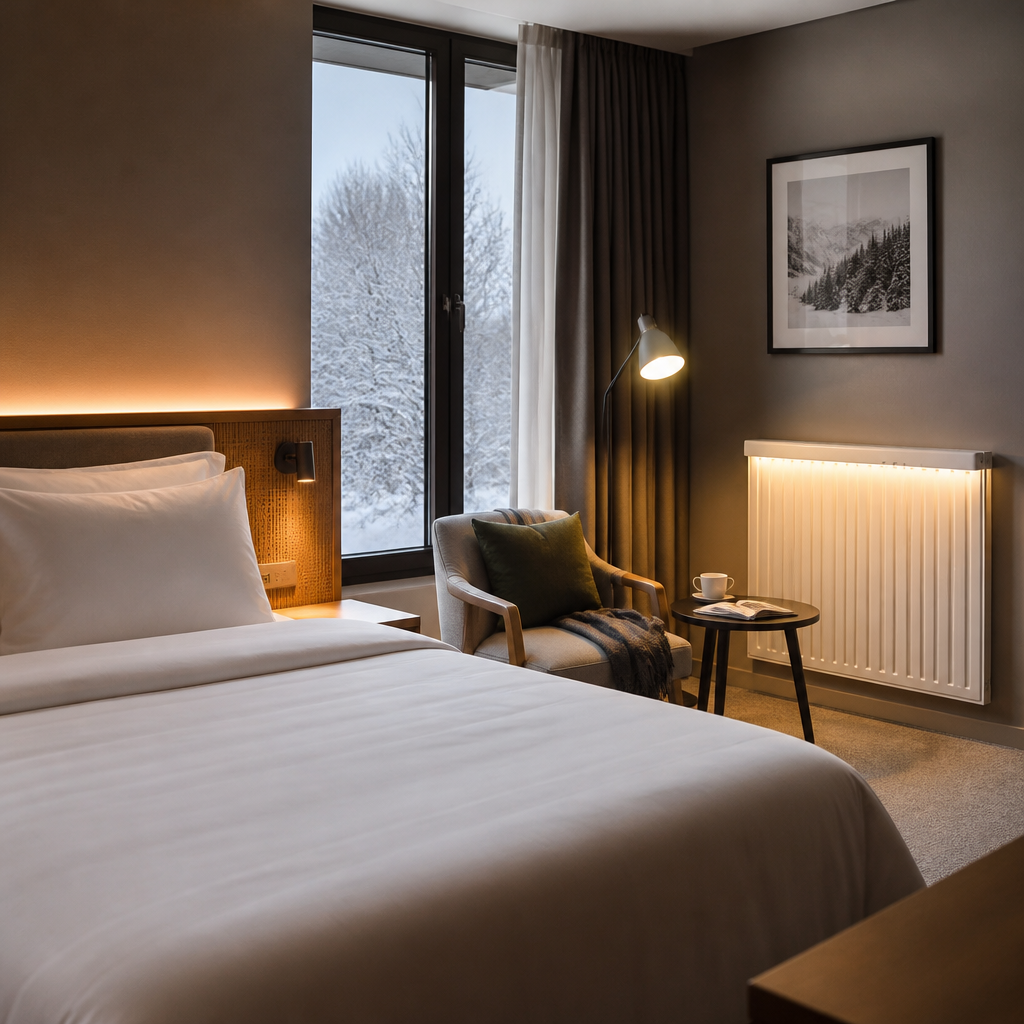
Schedule heating so rooms are comfortable at check-in rather than warming up after a guest has arrived. Test heating controls and radiators before the season starts and again before any expected cold snap. Ask housekeeping to report any room that feels cold during routine checks, and log it in your maintenance system so the fault is fixed before the next guest.
A common mistake is to treat thermostat settings as a guest preference. Most guests simply want a comfortable room, and they will not care which control the team adjusted.
Responding to a cold room complaint
Respond within minutes, not at the end of the shift. Apologise, then move the guest if a comfortable room is available, or bring in a portable heater if your policy and safety rules allow it. Do not argue about the thermostat in front of the guest.
Follow up later that evening. A short call or visit shows you have acted, and it turns a complaint into proof of attentiveness.
Pro tip: Keep a short list of rooms with known heating issues and allocate them last. That gives maintenance time to fix them and avoids placing a guest on a long stay in a room you already know is struggling.
Staffing and Shift Planning for Seasonal Peaks
Winter demand is rarely steady. Peaks around holiday periods, major events and difficult travel days can push a team that was comfortable a fortnight earlier into overload. The International Hospitality Institute’s guide to hotel staff scheduling notes that demand can vary with the time of year, local events and weather, and that accurate forecasting is central to good rostering.
Poor scheduling leads to overworked employees, lower morale and a weaker guest experience. In winter those effects compound, because tired staff are more likely to rush the arrival sequence that matters most.
Forecasting winter demand
Build your forecast from historical data, booking trends and external factors such as weather and local events. Review it weekly through the season, not once in October. A snowfall forecast for the day after a holiday weekend is a clear signal to add arrival cover, even if the bookings look normal.
Protecting frontline energy
Winter shifts often start or finish in the dark, and bad road conditions can delay staff as easily as guests. Scheduling tools that let employees request shift changes, trade shifts or submit availability help people plan around travel problems, and they support engagement. Give people a clear route to ask for changes before the roster is published, not after a storm has hit.
Avoid stacking long shifts on the same people during peak weeks. A rested receptionist handles a difficult call more calmly than an exhausted one.
Handling Disrupted Travel Plans
Winter disruption is the reason many guests arrive late, arrive at the wrong door, or arrive with no idea how long they will be. Your service in these moments often matters more than the room itself, because it decides whether the guest feels looked after or left alone.
Managing late and disrupted arrivals
Set up a simple routine for late arrivals. Confirm the new expected time, note it on the reservation, and check that the room, key process and any restaurant booking still work. If a flight or rail cancellation has delayed a guest, ask whether they need help with onward travel or a taxi booking, but do not promise times you cannot control.
A common mistake is to let the night team discover a late arrival at midnight with no notes. Make sure handovers include every guest expected after the evening rush.
Keeping guests informed without overpromising
Tell guests what you know, when you will update them, and what you can offer. If a road is closed, say so, but do not guess how long it will stay closed. Guests forgive delays far more readily than they forgive being misled.
Keep a list of nearby alternatives, such as taxi firms and transport timetables, and have the front office team update it. Check it before each shift, because winter conditions change faster than most printed guides.
Winter Traditions and Local Touches
Guests remember when a property seems to notice where they are. Highlighting regional or lesser-known winter festivities can help a hotel stand out from competitors that focus only on major holidays, and it shows appreciation for the local community. The Hotels Network blog makes this point in its guidance on seasonal moments.
Researching local winter events
Ask your team to compile a short list of local winter events, markets and traditions each season, with dates and a line on what each one is. Train front-of-house staff to mention them naturally rather than reading from a script. Avoid assuming a tradition belongs to a particular group, and check details with colleagues who know the area well.
Décor that adds warmth without clutter
Winter décor works best when it is textural. Throws, velvet cushions, pinecones and soft lighting make a lounge feel warm without making it look busy. Fairy lights and faux snow are popular choices, but keep cables away from heaters and check that decorations do not block exits or fire equipment.
I would rather see one well-placed throw and a warm lamp than a lobby covered in ornaments that need constant dusting and create a fire risk.
Choosing a Winter Service Approach
Not every property needs the same winter programme. Three approaches are common, and each suits a different situation. The table below sets out what each involves and when it earns its place.
| Approach | What it involves | Best used when |
|---|---|---|
| Reactive complaint handling | Responding to issues as guests raise them at the desk, by phone or in reviews | As a backstop in every property, especially where winter volume is low |
| Proactive pre-arrival messaging | Sending weather-aware updates on transport, parking, entrance access and expected arrival times | Many guests arrive by air, rail or long-distance transfer |
| Written seasonal standards | A documented checklist for entrances, rooms, desk scripts and handovers, reviewed each season | Teams work several shifts or take on frequent new starters |
If you can only introduce one, start with written seasonal standards. They turn individual good intentions into something a new starter on a night shift can follow. Pre-arrival messaging is the next step for properties with a high share of guests travelling a long way.
Reactive complaint handling is not a strategy on its own, but it remains essential. Every complaint should feed back into the standards, so the same problem does not return next January.
Measuring Winter Guest Satisfaction
You cannot improve winter service without knowing where it breaks down. The Amadeus guide points out that collecting feedback lets you measure performance precisely, and in winter that feedback often arrives as short, specific comments about temperature, access or transport.
Amadeus also reports that 50% of travellers polled rely on advice from friends and family, and 49% use social media to learn more about their next destination. For a winter stay, that means one cold room mentioned in a group chat can shape a booking decision long before the guest writes a review.

Asking the right question during the stay
A generic “how was everything?” rarely produces useful answers. Ask about warmth, arrival and getting around, for example whether the room is warm enough or whether the route from the car park was clear. Specific questions get specific answers you can act on the same day.
Reading winter feedback for patterns
Tag every comment by cause, such as heating, access, transport or staff response, and review the tags weekly. A single complaint about a cold room is an incident. Five across a fortnight points to a gap in the heating schedule or maintenance routine.
Pro tip: Keep the tag list to five or six categories at most. A long list is hard to maintain, and staff stop using it after a week.
Frequently Asked Questions
What does winter hospitality service involve?
Winter hospitality service covers the practical steps that keep guests comfortable and informed during cold months, including clear entrances, warm rooms, sensible staffing and calm handling of travel disruption. It is less about special seasonal extras and more about getting the basics right when conditions are hard.
Does completing Hospitality Foundations guarantee a promotion or a job?
No. Completing the course does not guarantee employment or promotion. It builds practical skills that you can apply in your current role or when you apply for new ones.
What is the difference between a Udemy certificate and GHI Certification?
A Udemy course completion certificate confirms that you finished the course on that platform. GHI Certification is a separate step, open to learners who complete the Hospitality Foundations programme and achieve at least 80% in the Final Assessment.
How should staff greet a guest who arrives cold and late?
Start with the journey rather than the paperwork. Offer a hot drink or a dry place for wet clothing, confirm the late arrival details, and explain the next steps in plain language.
What is the most common winter service mistake in hotels?
In practice, it is letting the entrance go unchecked. A wet, icy or poorly lit doorway undermines every other part of the service, and it is usually the cheapest problem to fix.
Advance Your Hospitality Career
Build practical, industry-relevant skills with Hospitality Foundations, the online training programme from Global Hospitality Institute. Learn at your own pace and take the next step in your hospitality career.
Tell us which winter service challenge causes your team the most trouble and what has worked for you in practice.
References
- Guide to elevating hotel guest satisfaction and collecting feedback
- Best practices for hotel staff scheduling and demand forecasting
- Ideas for inspiring guests with regional and seasonal winter moments
- Winter décor and textile ideas for hotel public areas