
Ask a guest what the housekeeping department does and most will say “cleaning rooms”. That answer misses most of the work. A hotel housekeeping department is responsible for room condition, linen supply, the presentation of public areas, guest requests and a surprising amount of stock control. When it runs badly, guests notice quickly. This overview explains how the department is organised, what each role does day to day, how supervisors check quality and what a team needs from its training.
Table of Contents
- Quick Takeaways
- What the Housekeeping Department Is Responsible For
- The Daily Work of Room Attendants
- Linen, Public Areas and Back-of-House Work
- Housekeeping Operations and Room Assignment Methods
- Supervision, Inspections and Quality Standards
- Training Housekeeping Teams
- Career Paths Within Housekeeping
- Frequently Asked Questions
- References
Quick Takeaways
| Key Insight | Explanation |
|---|---|
| Housekeeping covers far more than guest rooms | Public areas, linen stores and staff spaces draw on the same daily labour, and each needs its own written standard. |
| Stayover and checkout cleans are different jobs | A stayover is lighter and focused on guest requests. A checkout clean resets the whole room, so schedule and staff them separately. |
| Linen control is a stock problem | Count clean, soiled and in-use linen every shift. A shortfall delays room turnover faster than most other gaps. |
| Write one checklist per room type | A suite and a standard double need different steps. A short checklist for each type reduces missed items and makes inspection fair. |
| Inspect a sample of finished rooms every shift | Spot checks show whether the checklist is being followed, not just whether a room looks tidy from the doorway. |
| Train on the floor before testing | Shadowing an experienced attendant on a full checkout clean teaches more than a manual, so keep the first sessions in person. |
What the Housekeeping Department Is Responsible For
At its core, the hotel housekeeping department keeps the property clean, stocked and ready to sell. Published guides on the subject tend to list the same core tasks, from cleaning occupied rooms to restocking amenities, and the lists are broadly accurate. The harder part is understanding how those tasks fit together across a 24-hour operation.
Guest room work
Guest room work covers cleaning and refreshing occupied rooms, turning over rooms between reservations and preparing add-ons such as extra linen or in-room items when a guest has ordered them. Attendants also restock amenities and respond to requests for more towels, pillows and similar items. In practice, the room is the unit of measurement. Almost every task in the department is judged by whether a room is ready for the next guest.
Public areas and shared spaces
Many properties also assign housekeeping responsibility for lobbies, corridors, lifts and washrooms, although the exact split varies from hotel to hotel. A tired lobby is often the first thing a guest judges, even when the rooms are immaculate. Putting these areas on a fixed rota, rather than leaving them to whoever has a spare moment, is one of the simplest ways to protect that first impression.
Requests that arrive outside the schedule
A large share of a supervisor’s day goes to requests that appear on no plan. A guest may need a cot, an extra kettle or a spill cleaned before dinner. The department works best when front office, housekeeping and maintenance agree who responds to what, and when every request is logged so nothing is lost between shifts.
The Daily Work of Room Attendants
Room attendants do most of the visible housekeeping work, and their shift is shaped by the mix of rooms they are given. The most useful way to understand the role is to split the day into two kinds of clean. Each needs different time, different supplies and different checks.
Stayover cleans
A stayover is a room where the guest is staying on, and the clean is usually lighter. Attendants make the bed, replace dirty linen and towels, empty bins, tidy surfaces and check the bathroom. They should not rearrange a guest’s belongings, and where a guest has asked for no service, that request must be logged and respected.
Checkout and turnover cleans
A checkout clean resets the room from the ground up. Attendants strip and remake the bed, clean the bathroom fully, dust and wipe every surface, vacuum, and check in-room items against the inventory list. The room is then inspected or marked ready, and that status needs to reach the front desk quickly.
Why room status matters more than most people think
A room marked clean that still has a broken lock or a leaking tap cannot be sold. Attendants who report faults clearly, and who avoid marking a room ready before they have finished it, spare the front office from awkward check-ins. Speed matters, but accurate status matters more.
Pro tip: Ask attendants to log a fault at the moment they find it, not at the end of the shift. Faults noted at the end of a shift are often forgotten by the time the next team starts.
Linen, Public Areas and Back-of-House Work
Much of the department’s performance depends on work guests never see. Linen, supplies and back-of-house spaces decide whether room attendants can finish their tasks on time. When these fail, the gap appears on the floor within hours.
Linen rotation and par levels
Par level is the number of clean items a property aims to hold so that every room can be made up without waiting. Linen moves in a cycle: clean stock goes to rooms, soiled items go to the laundry, and returned clean stock goes back to storage. Track it by count, not by feel, because a linen shortfall is one of the most common reasons turnover slips behind schedule.
Public areas and their cleaning schedule
Public areas need a schedule that matches guest traffic. A busy lobby may need attention several times a day, while a rarely used corridor can be done less often. Written schedules with initials or times show who did what and when, which is invaluable when a guest complains about a washroom in the early evening.
Back-of-house spaces
Linen rooms, housekeeping stores and staff areas often fall within the department’s remit. Their condition affects how quickly staff can work. A cluttered linen room with mixed stock slows every shift, so keep shelves labelled and stock rotated.
Pro tip: Photograph your linen room shelves once a month and compare them with the previous set. Clutter and drift in stock levels are easier to spot in pictures than in day-to-day walk-throughs.
Housekeeping Operations and Room Assignment Methods
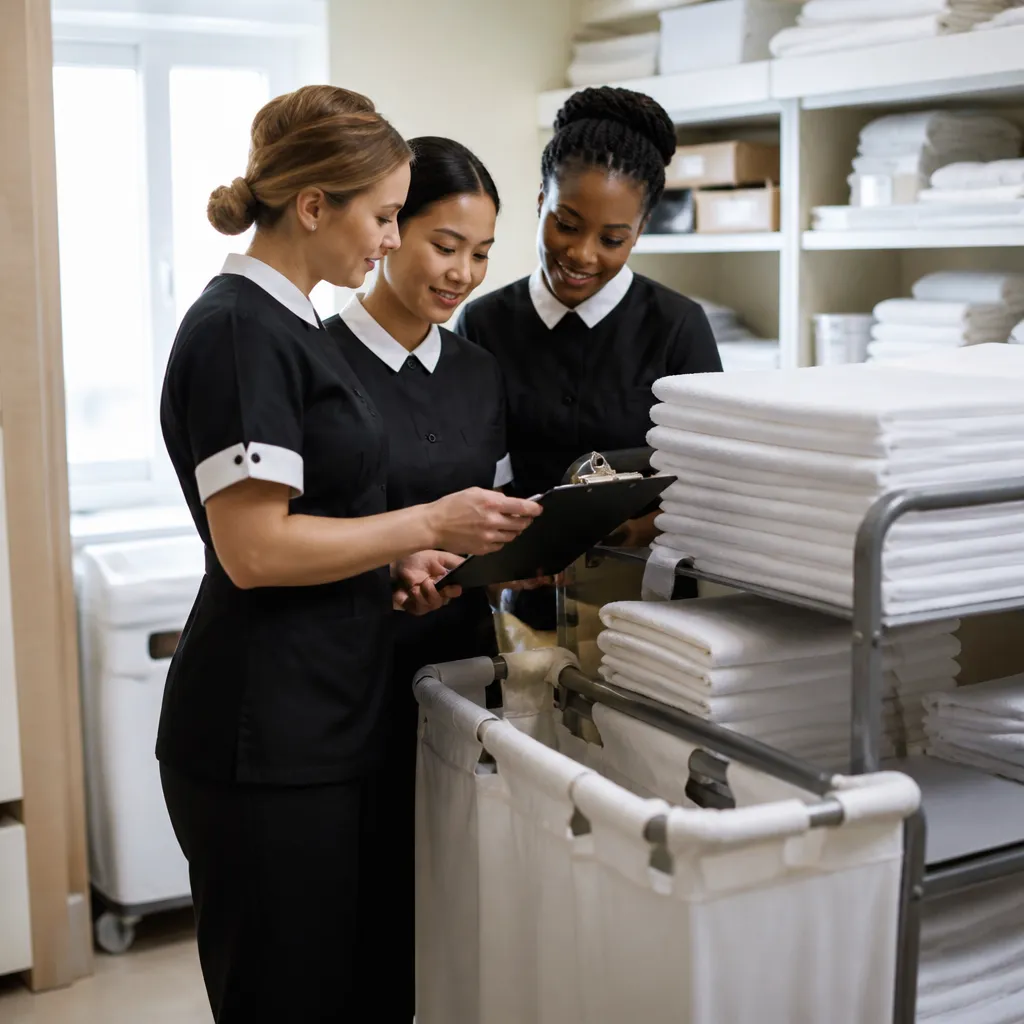
How a department assigns rooms shapes its daily rhythm more than almost any other decision. Two properties with identical staff can perform very differently if one allocates work by room and the other by zone. The right choice reflects the building layout, the guest mix and the team’s experience.
Individual room assignment
Each attendant is given a set of rooms, usually by floor or by number range. This gives clear accountability, because a missed room has one owner. The weakness is uneven workload, since a shift with several checkouts can be far heavier than one with mostly stayovers.
Floor and zone assignment
Here, a team or an attendant covers a defined floor or wing, and rooms are shared out according to the day’s status. Zones cut walking time and make supervision easier. The downside is that accountability can blur when several people work the same floor.
Choosing between them
In practice, many departments combine the two. Rooms are assigned to individuals for consistency, while checkouts on a busy floor are shared across the zone once early departures are known. Whichever method you use, write it down and review it whenever occupancy changes.
| Approach | How it works | Main trade-off |
|---|---|---|
| Individual room assignment | Each attendant owns a fixed set of rooms | Clear accountability, but workload is uneven on heavy checkout days |
| Floor or zone assignment | A team covers a defined floor or wing | Shorter walking time and easier supervision, but accountability can blur |
| Hybrid assignment | Individual rooms, with checkouts shared across a zone | Balances workload, but needs a clear status board to avoid confusion |
Supervision, Inspections and Quality Standards
Supervisors turn a checklist into a standard. Without inspection, a checklist is only a document. A good supervisor spends less time checking everything and more time sampling carefully, so faults are caught before a guest finds them.
Room inspections that catch real problems
Inspect a sample of finished rooms each shift, and focus on the places guests check first: beds, bathroom surfaces, glassware, the door and the smell of the room. A room can look tidy and still fail on hygiene in a corner nobody cleaned. Record faults by room and by task so patterns become visible. Rubbermaid’s guidance on improving a housekeeping department lists housekeeping audits and cleaning checklists among its five tips, and both belong in a supervisor’s routine.
A checklist tells a team what to do. An inspection tells you whether they did it, and the gap between those two is where most quality problems begin.
Checklists as a standard, not a punishment
Checklists work best when attendants help write them. A list drafted by someone who has not made beds in a busy hotel will either be ignored or followed so literally that it misses the point. Build one checklist per room type, keep each step short, and revise it when a product or procedure changes.
Pro tip: Clean one room yourself using the checklist before you finalise it. The steps that feel awkward in practice are usually the ones that are missing or in the wrong order.
Training Housekeeping Teams
Training is where housekeeping standards either take hold or quietly fade. New staff learn fastest by watching a trained colleague, and experienced staff need refreshers when procedures change. The aim is consistent practice across every shift, not one excellent attendant.
Shadowing before solo work
Flexkeeping’s practical guidance on housekeeping training recommends that the first sessions be held in person, with shadowing, rather than left to a manual. That matches what works on the floor. A new attendant who has watched a full checkout clean will make fewer mistakes in the first week than one who has only read the procedure.
Refreshers when procedures change
Experienced attendants drift from standards faster than newcomers do. When a product changes, a linen supplier switches or a checklist is revised, hold a short briefing and check one room together. Small, repeated sessions work better than one long session that nobody remembers.
Where formal training fits
Structured courses can give frontline staff a shared vocabulary for guest service and hotel operations, which makes on-the-job teaching easier. Hospitality Foundations, the online programme from Global Hospitality Institute, covers hotel operations, guest experience, communication, service excellence and professional hospitality skills, and is available through Udemy. Learners who complete the programme and score at least 80% in the Final Assessment can apply for GHI Certification. Completing the course on Udemy is a separate achievement from GHI Certification, so keep the two distinct on your CV.
Pro tip: Pair each new attendant with the same trainer for their first week. Rotating trainers spreads small habits, and the new starter ends up learning three versions of the same task.
Career Paths Within Housekeeping
Housekeeping can be a career, not just a job. A common progression runs from room attendant to lead attendant, then supervisor, assistant housekeeper and executive housekeeper, although titles vary by property size and company. Each step adds responsibility for people, budgets and standards.
What supervisors are judged on
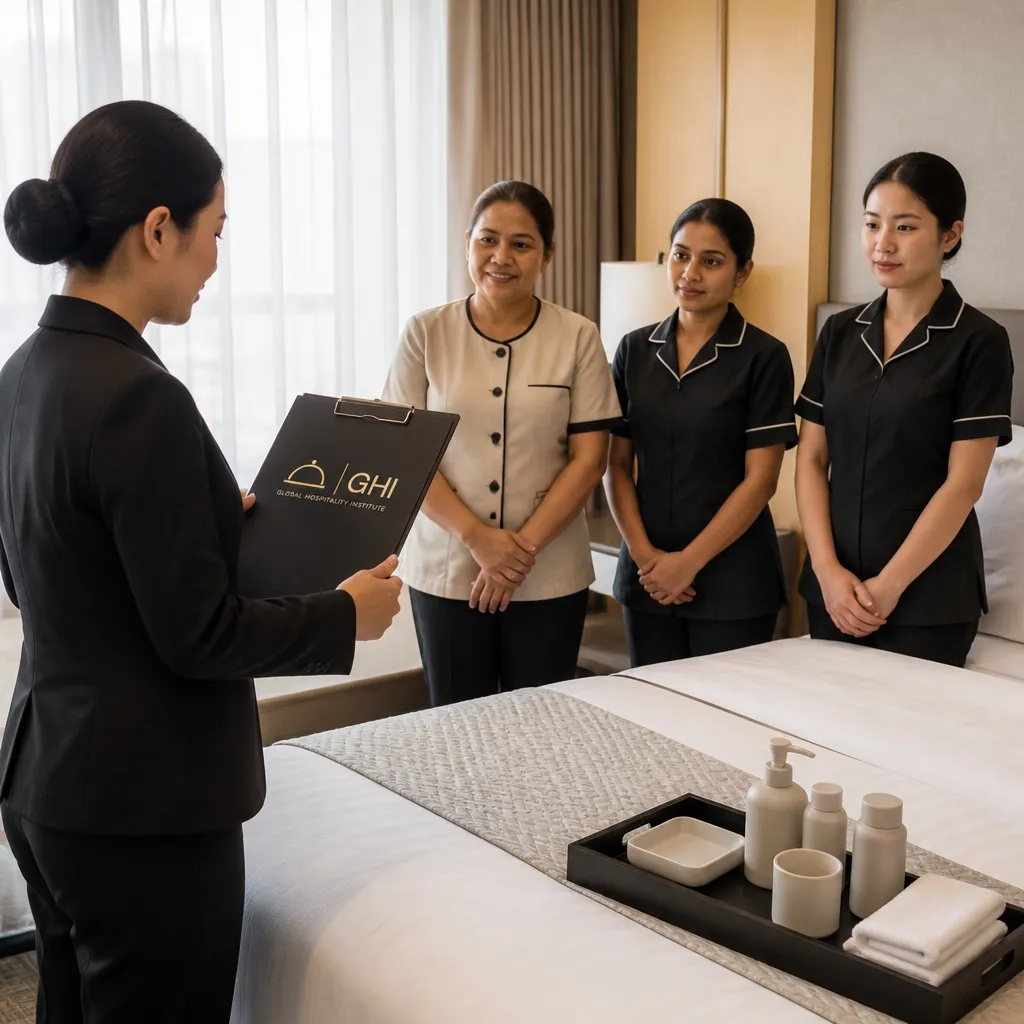
Supervisors are usually measured on room readiness times, inspection results, guest complaints linked to housekeeping and how stable the team is. Stability matters more than many newcomers expect, because constant turnover erodes standards faster than any single bad shift. Learning to read those measures makes you more useful in any review.
Building the skills that move you up
The skills that separate a lead attendant from a supervisor are scheduling, basic stock and budget awareness, training others and communicating clearly with front office and maintenance. Start with one of these in your current role, such as keeping the linen count or running a short briefing, and record the results. Structured study can support that progress, and you can explore the wider range of courses at Global Hospitality Institute. Training strengthens your case for promotion, but it does not guarantee one.
Frequently Asked Questions
What does a hotel housekeeping department do?
The department keeps guest rooms, public areas and related spaces clean, stocked and ready for guests. Its work includes room cleaning and turnover, linen supply, amenity restocking, responding to guest requests and maintaining stock. Quality is checked through inspection and supervision.
What is the difference between a stayover and a checkout clean?
A stayover is a clean for a room where the guest is staying on, so the work is usually lighter and focused on bed, bathroom and linen. A checkout clean resets the room completely, including a full bathroom clean, surface cleaning and an inventory check. The two should be scheduled and timed differently.
How do housekeeping and front office work together?
Front office needs to know which rooms are ready, which are occupied and which have faults. Housekeeping supplies that information through a room status process, and accuracy matters more than speed. A room marked ready before it is finished creates problems at check-in.
Is GHI Certification the same as a Udemy course completion certificate?
No. Hospitality Foundations is available through Udemy, but GHI Certification is a separate step. Learners who complete the programme and achieve at least 80% in the Final Assessment can apply for GHI Certification, and a course completion record on its own does not replace that process.
What should a new housekeeping supervisor check first?
Start with the basics: the linen count, the room status log and the morning schedule. Then inspect a sample of finished rooms and speak to attendants about what slows them down. Changing a process without first understanding the current one usually creates new problems.
Does completing training guarantee a promotion?
No. Training can build knowledge and make your experience easier to describe, but promotion depends on performance, team needs and the decisions of your employer. Treat training as a way to prepare for opportunities rather than as a guaranteed route to them.
Build practical, industry-relevant skills with Hospitality Foundations, the online training programme from Global Hospitality Institute. Learn at your own pace and take the next step in your hospitality career.
We would like to hear how housekeeping works in your property, so share your experience or questions in the comments below.
References
- Complete guide to hotel housekeeping best practices, checklists and tips
- Day-to-day hotel housekeeping duties explained through a typical shift
- Hotel housekeeper job description and typical duties
- Practical tips for efficient hotel housekeeping training
- Five ways to improve a hotel housekeeping department